
Professional diving is not a niche activity or a single career path. It is a global professional industry spanning multiple sectors, disciplines, and economic activities.
From offshore infrastructure to marine science, from tourism to defense, from media to environmental restoration — diving operates across a wide operational and economic landscape.
Defining the Profession
Like aviation, maritime, healthcare, and other structured industries, professional diving is built on a combination of core operators, technical specialists, and supporting roles.
It is not defined by a single training pathway, certification level, or agency title. It is defined by work, responsibility, structure, and real-world activity.
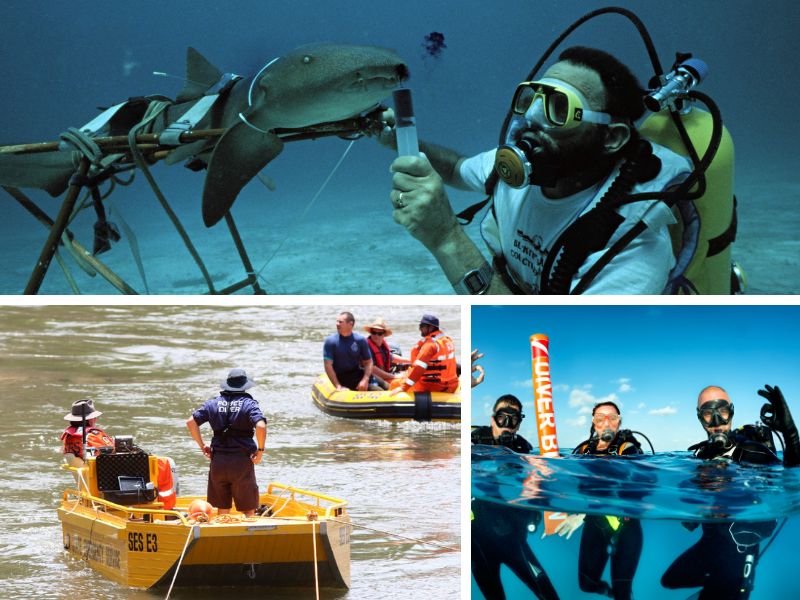
What is a professional diver?
A professional diver is an individual who performs diving-related work as part of a registered economic or institutional activity, whether as an employee, contractor, or business owner, on a full-time or part-time basis.
This includes those working within registered diving companies, operating independently as contractors, owning or managing diving-related entities, or delivering diving-related services within a structured and accountable framework.
Beyond Certification
In parts of the recreational sector, the term “professional” is often linked to certification levels. These programs are important entry points, but they do not define professional status on their own.
Real Activity
Professional status requires actual involvement in diving-related work or services.
Structured Work
The activity takes place within a recognized company, institution, or registered entity.
Responsibility
The individual carries responsibility toward clients, teams, operations, projects, or safety.
Professional Diver vs Dive Professional Certification
As in other industries, a distinction exists between those who perform the core activity and those who support and sustain the wider professional environment.
Professional Diver
An individual directly engaged in diving-related work or operations.
Dive Professional Certification
A certification pathway or training level that may provide access to professional activity, but does not by itself define professional status.
The Diving Industry – A Multi-Sector Profession
Professional diving is not one uniform industry. It is a network of sectors operating across very different economic, regulatory, and environmental conditions.
- Training pathways differ
- Legal frameworks and certification requirements vary
- Access to work, vessels, equipment, and infrastructure is not equal
- Income levels and business models shift with local economies
Understanding professional diving requires both a global structural view of the sectors and a local operational view of country-specific realities.
This is why the sector framework will be supported by dedicated Country Reports, providing deeper insight into national diving markets, local working conditions, regulatory environments, training structures, and economic realities.
Professional Diving Sectors
Recreational Diving & Training
Instruction, guiding, supervision, and tourism-based diving services.
Accessible but competitive and often seasonal.
Commercial & Industrial Operations
Construction, inspection, offshore operations, salvage, ports, and infrastructure work.
High-risk, high-demand, regulated sector.
Scientific & Research Diving
Field research, monitoring, archaeology, environmental studies, and academic diving activities.
Impact-driven, often institution-based.
Medical & Hyperbaric Diving
Dive medicine, treatment, hyperbaric chamber operations, and decompression-related support.
Specialized medical field requiring formal qualifications.
Environmental & Restoration
Conservation, reef restoration, biodiversity monitoring, habitat protection, and restoration projects.
Growing but often funding-dependent.
Public Safety & Military
Search and recovery, law enforcement diving, military diving, coast guard, and emergency response operations.
Structured, disciplined, and responsibility-heavy environment.
Media, Communication & Industry Voice
Photography, film, journalism, reporting, content production, and industry communication.
Freelance-heavy, competitive, and visibility-driven.
Manufacturing, Engineering & Trade
Equipment design, production, testing, distribution, servicing, technical innovation, and trade operations.
Often land-based, stable, and essential to the industry.
Operations & Support Infrastructure
Logistics, vessels, captains, crew, gas systems, compressor handling, maintenance, and operational management.
The backbone that enables diving operations to function.
Sports, Performance & Public Engagement
Freediving, competitions, coaching, demonstrations, outreach, and performance-based diving activity.
Niche, often combined with coaching, media, sponsorship, tourism, or education.
Who Works in This Industry?
Professional diving extends far beyond those who physically enter the water. A complete industry depends on a wide range of roles working together across sectors.
The profession is defined by function and contribution, not by labels, titles, or certification brands.